

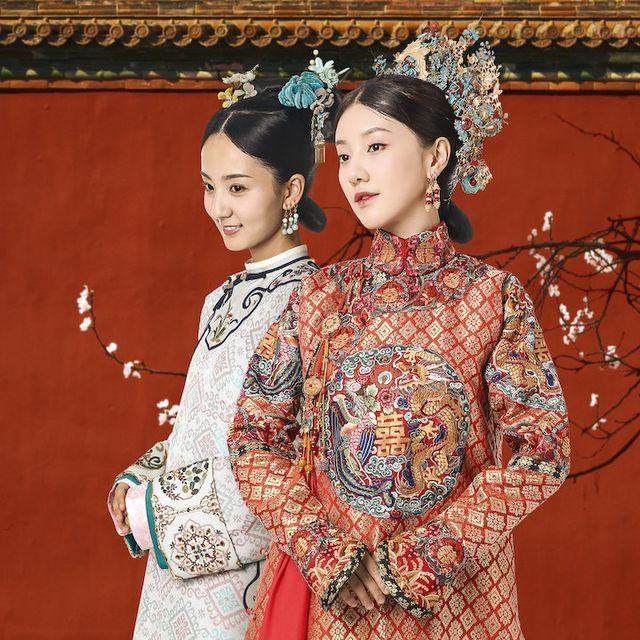
So the news is out that there’s going to be a Yanxi Palace sequel released via Netflix last day of the year, which basically covers the second gen stories in the original online novel. I have to say I’m not a big fan of the story, seems a little too dramatic (not that the original one wasn’t). However, what intrigued me is the Mongolian prince in the sequel and also in history.
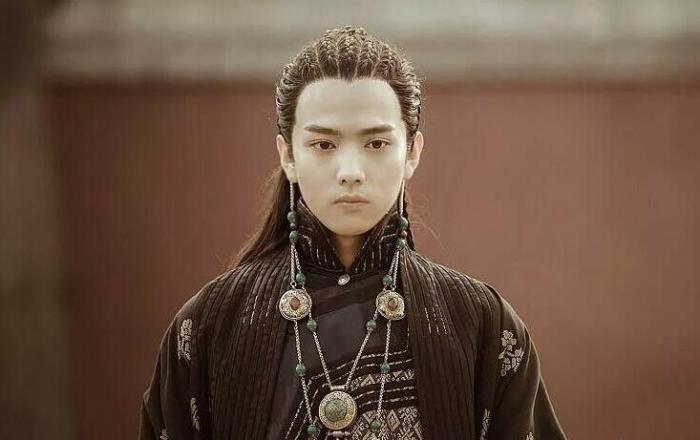
Before you call them out on cultural appropriation of the braids (cough), I would like to reiterate that braiding has existed across cultures as the most no brainer way of securing and decorating your hair, and it has thousands of years of history across the world. Africans, Mongolians, Tibetans and many ethnic groups all do that.
I have to admit my bias towards the Mongolian prince over the Manchurian prince in the story, and even over the Manchurian princess whom he got married to. He seems like a much more interesting person to talk about (also cos he lived a ripe old age compared to the princess). So will spend a little bit more of this entry on this (sorry for the misleadingly female-dominated cover picture).
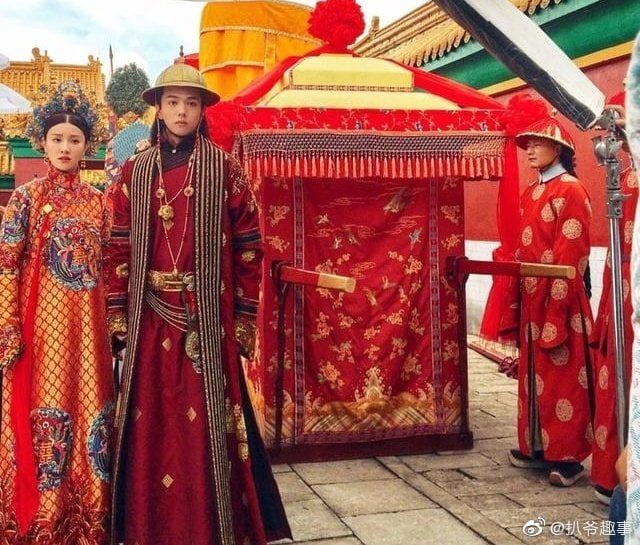
Appointed/Arranged “Child-marriage”
There is an old Chinese custom where parents had the right to decide between the two families that their children will be married to each other when they grow up. My own great greatparents’ marriage was determined that way even before they were born, and when they became of marriageable age, the two families honoured the agreement and they got married to each other.
This was kind of the case for the Mongolian 7th Prince of the Borjigin clan and the Manchurian 7th Princess (Gurun Princess Hejing) of Emperor Qianlong. Kind of because Lavan Dorji was just about 2 years old and the 7th Gurun Princess was only 3 months old when this marriage was arranged by Emperor Qianlong. But their marriage ceremony was only officially performed 14 years later (yea, people used to marry really young and the coming of age ceremony for girls were conducted when they were 15 years old). You might want to say, hey she’s only 14, not 15 yet! well, if we bear in mind that the Chinese considered the 40 weeks in mother’s womb as part of your age, so generally we would add 1 to our modern-calculated age to get our ‘Chinese age’, and that makes her 15 and of marriageable age!
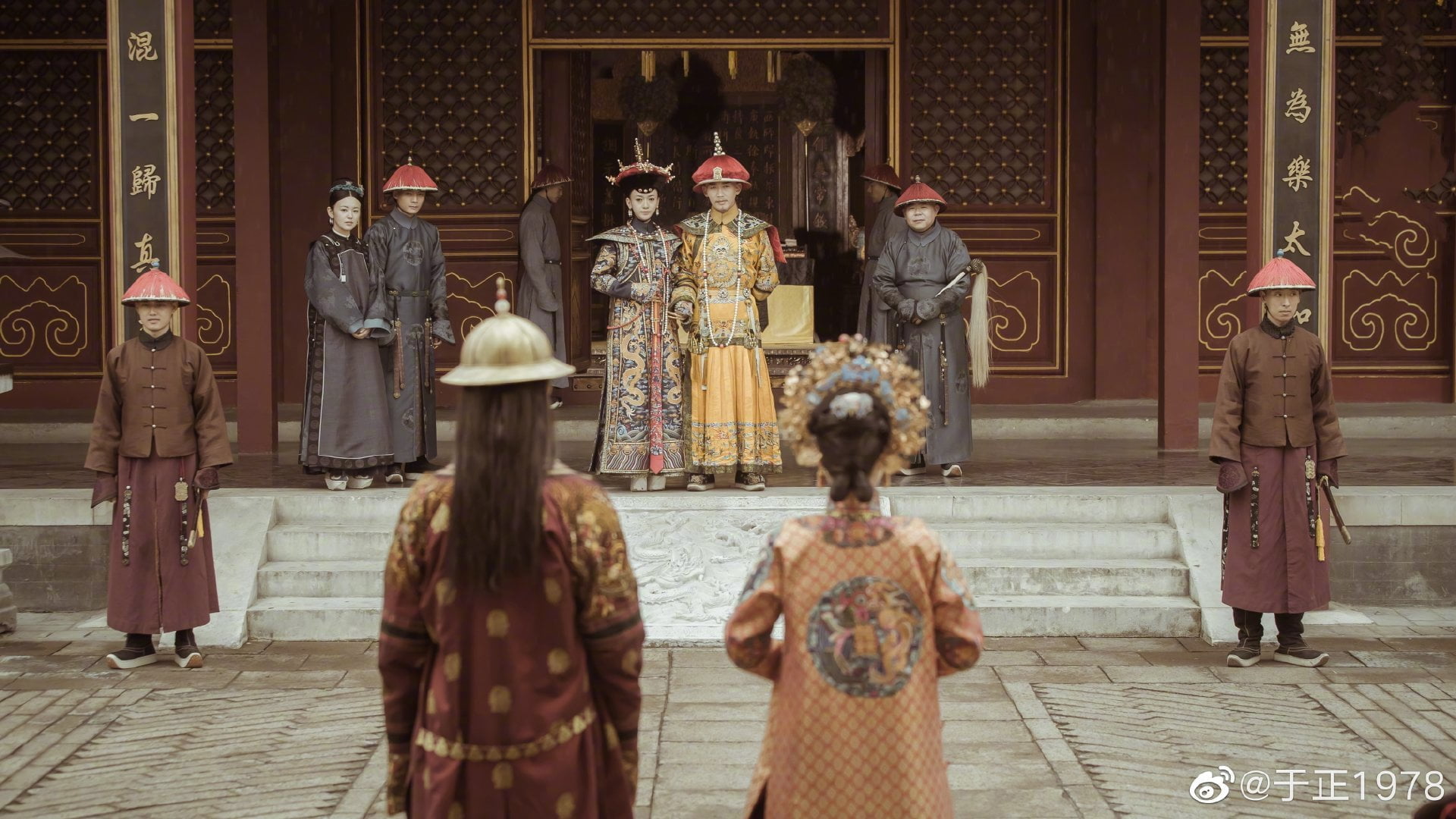
Fast-tracked royal status
Clearly Emperor Qianlong is bias towards this 7th prince, and ordered for him to be brought to the capital to study with the other Manchurian princes in the palace when Lavan Dorji was just 3 years old. Qianlong was concerned that the educational environment isn’t as robust as the ones in his palace (but of course). And when Lavan Dorji was only 4 years old (and the 7th Princess was only 2), Emperor Qianlong brought him to meet the little Princess. Awww… how cute.
In principle, the 4th son of the Mongolian Prince of First Rank (complicated system which I won’t delve into too much at this point) is the rightful successor to the title of the Prince of First Rank (He Shuo prince). However, due to Qianlong’s favouritism, he removed the 4th prince and instated the 7th prince as the successor of this title. Not the most diplomatic thing to do if one were to establish friendly ties with the Mongolian tribe, but I guess it worked out fine thereafter.
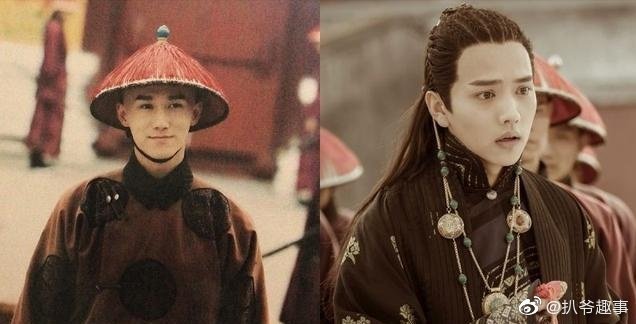
In addition, all of the properties and wealth belonging to his father, the original Mongolian Prince of First Rank, were to be passed to the 7th prince thereafter. Emperor Qianlong made it a point to give out an imperial edict to all of his 6 other brothers on reasons why each one of them did not deserve any inheritance. And because the Mongolian Prince of First Rank’s tribe was extremely wealthy, the 7th prince also inherited a huge fortune from his father.
What’s more! Emperor Qianlong even opened a pawn shop in the capital and got his officers from the Internal Affairs Bureau to manage it with profits all going to the 7th prince!
 White Horse and Prince Charming
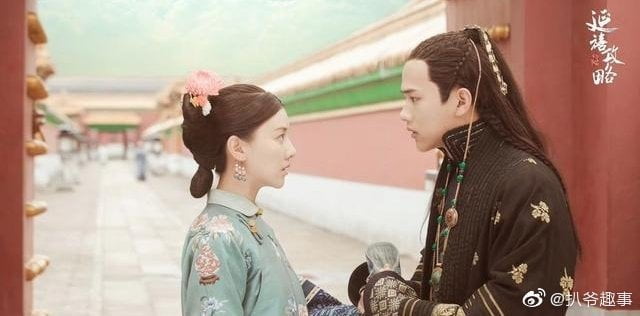
Typically, princes who married the emperor’s daughters would be sent to the borders to fight the invading armies and defend the Manchurian empire. But in reality, except for the third princess’s husband, none of his other son-in-laws had to fight battles. Same goes for our white horse prince charming Lavan Dorji while the princess was still alive. Instead of being sent back to Mongolia to watch over the Mongolian borders, Emperor Qianlong built a mansion in the capital for the princess and the prince with no need to risk his life at the frontline or in any warfare.
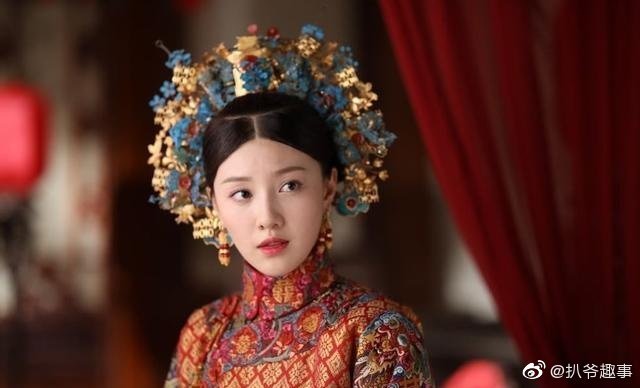
Alas, many of Emperor Qianlong’s daughters didn’t make it too far in life. About half didn’t survive into adulthood, and the 7th Princess only lived till the age of 20.
Prince Charming apparently didn’t do too badly on the battlefield and survived it all. After all, his grandfather, father and uncle were all very accomplished warriors and generals. But beyond that, the biggest reason is that Emperor Qianlong was looking out for him all the way too. He ensured that the prince was accompanied by capable people, and had secret orders for his officials to ensure the safety and fast return of the prince from the battlefields.
While some claimed that he had two major achievements in battle, but he was mostly quite sheltered from the main dangers. Of course, there were two instances where he protected Emperor Jiaqing (who succeeded Emperor Qianlong) from an assassin and a wild bear attack, but that’s about it. I mean he’s probably a brave man, and I have no doubt he would’ve achieved a lot more if not for the over-protection of his father-in-law.
Well, I’m kinda looking forward to the sequel because of the Mongolian prince to be honest.
And there is another interesting story related to Empress Dowager Cixi and the eldest daughter of Prince Kung which I recently learnt about. It would make a brilliant TV show content, but will write about it in time to come and hopefully one day a show on it will happen!


Leave a Reply